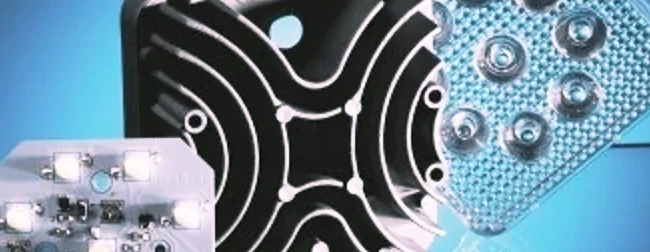
Ever wonder how tech stays cool under pressure? Meet the unsung hero of modern electronics: introducing: ‘The Thermoplastic Heatsink’.
From PCs to EV cars and industrial machines, heatsinks are essential for preventing overheating, maintaining peak performance, and extending device lifespans.
Here is how they work and the core differences you need to know:
How It Works: The 4-Step Cooling Process
1. The Source Generates Heat: Components like CPUs, batteries or LEDs produce thermal energy.
2. Heat Transfers Away: High-conductivity metals or conductive polymers pull heat from the source.
3. Heat Distributes: Thermal energy naturally spreads across the heatsink’s fins.
4. Heat Leaves the Heatsink: The heat transfers into the surrounding air or liquid.
Passive vs. Active: What’s the Difference?
• Passive Heatsinks: No moving parts. They rely on natural airflow. They are 100% silent and highly reliable, but offer lower cooling capacity.
• Active Heatsinks: Use fans, pumps, or blowers. They force airflow to deliver massive cooling power, but they use electricity and make noise.
The Future of Cooling: Metal-Matching Plastics
While copper and aluminium are the traditional standards, material science is evolving. Industry innovators like Senergy Innovations are disrupting thermal management with their SenTherm thermally conductive composite plastics. These advanced thermoplastics match the thermal performance of traditional aluminium while delivering a 35% weight reduction and up to an 80% reduction in manufacturing CO₂ emissions. By enabling scalable production via injection moulding, these composite plastics open up entirely new design flexibilities for EV battery systems, power electronics, and automotive engineering.
Whether you are building a custom PC, Lighting unit or an EV Car battery pack and module, or designing industrial machinery, choosing the right thermal management strategy is critical for success.